1. Clinical & Scientific Overview
Mandukaparni / Gotu Kola (Centella asiatica) (TIP-MED-000585, Reference Code [BOT-06]) is classified under
Medicinal Plants, Botanicals & Phytopharmaceuticals as a Pharmacognosy & Phytochemistry • Apiaceae (Dried Whole Aerial Plant / Leaves).
Within the Indian regulatory and compendial framework, it is governed under Indian Pharmacopoeia (IP) Monograph and API Part I Vol IV; distinct botanically and chemically from Bacopa monnieri..
Standardised Pharmacopoeial Crude Drug / Extract (IP / API Reference)
Official Plant Part: Dried Whole Aerial Plant / Leaves | Marker Compounds: Pentacyclic triterpenoid saponins and sapogenins (Asiaticoside, Madecassoside, Asiatic Acid, Madecassic Acid — TECA marker >=40%)
Pharmacognosy, Phytochemistry & Botanical Standardisation
Accepted Botanical Binomial & Authority: Centella asiatica (L.) Urb.
Botanical Family: Apiaceae
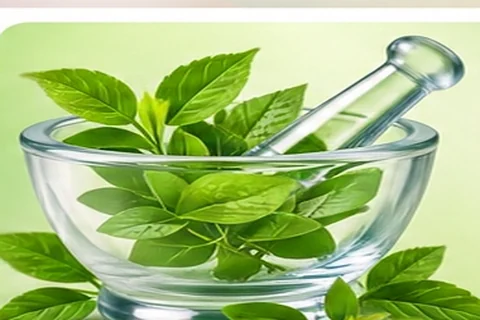
Official Authenticated Plant Part: Dried Whole Aerial Plant / Leaves
Major Phytochemical Constituents & IP/API Marker Compounds: Pentacyclic triterpenoid saponins and sapogenins (Asiaticoside, Madecassoside, Asiatic Acid, Madecassic Acid — TECA marker >=40%)
Traditional / Classical Ayurvedic Context: Used in Ayurveda as Medhya Rasayana (often confused vernacularly with Brahmi in northern India) and topically for wound healing.
Modern Clinical Evidence Assessment (Clearly Distinguished from Traditional Use): Clinical and pharmacological evidence supports collagen Type I synthesis stimulation in keloid/hypertrophic scar remodelling, venous microangiopathy (chronic venous insufficiency), and skin barrier soothing.
Quality Control, Adulteration & Contaminant Limits: Authenticate via HPTLC/HPLC marker assay; screen for heavy metals (Lead <=10 ppm, Arsenic <=3 ppm, Cadmium <=0.3 ppm, Mercury <=1 ppm), microbial load, and aflatoxins B1/B2/G1/G2 per IP/API.
Indian Regulatory Classification (ASU vs Phytopharmaceutical vs FSSAI): Indian Pharmacopoeia (IP) Monograph and API Part I Vol IV; distinct botanically and chemically from Bacopa monnieri.
3. Mechanism of Action & Pharmacodynamics
Major Phytochemical Constituents & Pharmacological Actions: Pentacyclic triterpenoid saponins and sapogenins (Asiaticoside, Madecassoside, Asiatic Acid, Madecassic Acid — TECA marker >=40%). Clinical and pharmacological evidence supports collagen Type I synthesis stimulation in keloid/hypertrophic scar remodelling, venous microangiopathy (chronic venous insufficiency), and skin barrier soothing.
4. Therapeutic Indications & Evidence-Supported Uses
- Traditional / Classical Context: Used in Ayurveda as Medhya Rasayana (often confused vernacularly with Brahmi in northern India) and topically for wound healing.
- Modern Clinical Evidence Assessment: Clinical and pharmacological evidence supports collagen Type I synthesis stimulation in keloid/hypertrophic scar remodelling, venous microangiopathy (chronic venous insufficiency), and skin barrier soothing.
🇮🇳 Jurisdiction & Indication Note: Indications and schedules reflect Indian compendial and regulatory records (CDSCO / Indian Pharmacopoeia & NFI / NLEM 2022). Where international reference labels (US FDA DailyMed / NCBI StatPearls) are cited for pharmacokinetic or mechanistic parameters, international approvals do not automatically imply CDSCO approval in India.
5. Educational Dosage Context, Formulations & Administration
Educational Dosing & Regimen Summary: Pharmacognostic & Clinical Evidence Summary: Clinical and pharmacological evidence supports collagen Type I synthesis stimulation in keloid/hypertrophic scar remodelling, venous microangiopathy (chronic venous insufficiency), and skin barrier soothing.
Administration & Meal Timing: Authenticated Plant Part Used: Dried Whole Aerial Plant / Leaves. Oral high-dose use rarely associated with hepatotoxicity and drowsiness; topical use has low irritation potential though contact dermatitis to raw plant extracts can occur.
6. Pharmacokinetics, Metabolism & Renal/Hepatic Adjustment
Complex multicomponent phytoconstituent disposition involving intestinal deglycosylation by gut microbiota, hepatic Phase II glucuronidation/sulfation, and potential modulation of CYP450 and P-gp efflux pumps.
Intestinal microbial hydrolysis and hepatic Phase I/II biotransformation of secondary metabolites.
Avoid unstandardised herbal extracts in Stage 3–5 Chronic Kidney Disease (risk of hyperkalaemia or nephrotoxic adulterants).
Avoid high-dose concentrated botanical extracts in pre-existing hepatic disease; discontinue immediately if jaundice or transaminase elevation occurs.
7. Contraindications, Precautions & High-Risk Warnings
- Hypersensitivity to Centella asiatica (L.) Urb. or other members of the Apiaceae family
- Oral high-dose use rarely associated with hepatotoxicity and drowsiness; topical use has low irritation potential though contact dermatitis to raw plant extracts can occur.
Key Clinical Precautions: Oral high-dose use rarely associated with hepatotoxicity and drowsiness; topical use has low irritation potential though contact dermatitis to raw plant extracts can occur.
8. Adverse Effects Profile
- Oral high-dose use rarely associated with hepatotoxicity and drowsiness; topical use has low irritation potential though contact dermatitis to raw plant extracts can occur.
- Oral high-dose use rarely associated with hepatotoxicity and drowsiness; topical use has low irritation potential though contact dermatitis to raw plant extracts can occur.
9. Major Drug–Drug, Drug–Food & Drug–Herb Interactions
- Oral high-dose use rarely associated with hepatotoxicity and drowsiness; topical use has low irritation potential though contact dermatitis to raw plant extracts can occur.
10. Clinical Monitoring, Patient Counselling & Storage
Clinical & Laboratory Monitoring: Verify botanical binomial authenticity (exclude adulterants/substitutes), HPTLC marker content, heavy metal limits (Pb, As, Cd, Hg), aflatoxins, and pesticide residues per IP/API standards.
Pharmacist Patient Counselling Points:
- Natural or herbal origin does NOT automatically mean risk-free; always disclose botanical supplements to your doctor and pharmacist.
- Oral high-dose use rarely associated with hepatotoxicity and drowsiness; topical use has low irritation potential though contact dermatitis to raw plant extracts can occur.
- Never discontinue prescribed allopathic chronic disease medicines (antihypertensives, antidiabetics, anticonvulsants, or antivirals) in favour of unverified herbal products.
Storage, Stability & Dispensing Safeguards: Store dried botanical material and extracts in airtight, light-resistant containers below 25°C protected from humidity and fungal/aflatoxin contamination.
11. Visual Pharmacology & Mechanism Diagram (svg-v339-01-adme-12-step-journey)
12. Authoritative References, Regulatory Sources & Editorial Disclaimer
Primary Compendial & Guideline Reference: Indian Pharmacopoeia (IP — Herbs and Herbal Products Addendum); Ayurvedic Pharmacopoeia of India (API — Ministry of AYUSH); CDSCO Rule 122E Phytopharmaceutical Drug Guidelines.
Official Verification Portals: Ministry of AYUSH — Pharmacopoeia Commission for Indian Medicine & Homoeopathy (PCIM&H) • Indian Pharmacopoeia Commission (IPC) — Herbal Monographs • CDSCO — Drugs and Cosmetics Rules (ASU & Phytopharmaceuticals)
Last Medically & Pharmaceutically Reviewed: 2026-11-10 • Verification Status: VERIFIED_EDUCATIONAL_CONTENT
Educational & Clinical Disclaimer: This reference profile is published solely for pharmacy education, academic study, and professional clinical reference. It does not substitute for patient-specific clinical judgement, qualified specialist oncology/medical supervision, or official CDSCO/IP prescribing information. Never self-medicate with prescription, Schedule H/H1/X, NDPS, or oncology medicines.
13. Related Reference Monographs, Educational Guides & Visual Concept
💊 Related Pharmacological / Category Profiles
- [BOT-11] Neem (Azadirachta indica) — Pharmacognosy & Phytochemistry • Meliaceae (Dried Leaves, Stem Ba
- [BOT-12] Kalmegh (Andrographis paniculata) — Pharmacognosy & Phytochemistry • Acanthaceae (Dried Aerial Parts
- [BOT-13] Shatavari (Asparagus racemosus) — Pharmacognosy & Phytochemistry • Asparagaceae (Dried Tuberous Roo
- [BOT-14] Yashtimadhu / Mulethi / Liquorice (Glycyrrhiza glabra) — Pharmacognosy & Phytochemistry • Fabaceae (Dried Peeled or Unpeel